
How to Reduce Dust Mites Naturally This Winter
If you or someone in your house seems to sneeze more once the heater goes on for the season, dust mites are usually the reason. They thrive in exactly the conditions a closed-up winter home creates: warm, still air and bedding that doesn't get aired out as often.
We touched on how dust builds up faster in winter in our piece on why dust builds up in bedrooms. This one goes a step further and looks specifically at dust mites, and the natural, low-tox ways to keep them under control without reaching for harsh sprays.
Why Dust Mites Get Worse in Winter
Dust mites feed on shed skin cells and thrive in warm, humid conditions. A heated bedroom with the windows shut for months is close to ideal for them. Bedding that isn't washed or aired as regularly through the colder months gives them exactly the environment they need.
It's a bit of a vicious cycle too. The colder it gets, the longer heaters run and windows stay shut, which means the exact conditions dust mites prefer become more constant rather than fluctuating the way they would in milder weather.
How to Tell If Dust Mites Are the Issue
Dust mite allergy symptoms tend to show up as sneezing, a runny or blocked nose, itchy eyes or a mild cough, often worse first thing in the morning after a night in bed. If symptoms ease noticeably after spending time outside or in a different room, that's a reasonably strong sign bedding and mattress dust are the trigger. For anything more persistent or severe, it's worth speaking with a GP rather than relying on cleaning changes alone.
Natural Ways to Reduce Dust Mites
Wash bedding in hot water weekly
Dust mites don't survive a hot wash. Aim for 60 degrees where the fabric allows, and don't stretch the gap between washes through winter just because it's colder and less appealing to deal with laundry.
Air bedrooms daily, even briefly
Five to ten minutes with a window open reduces the humidity dust mites need to thrive. Mornings tend to work best, before the room heats up for the day.
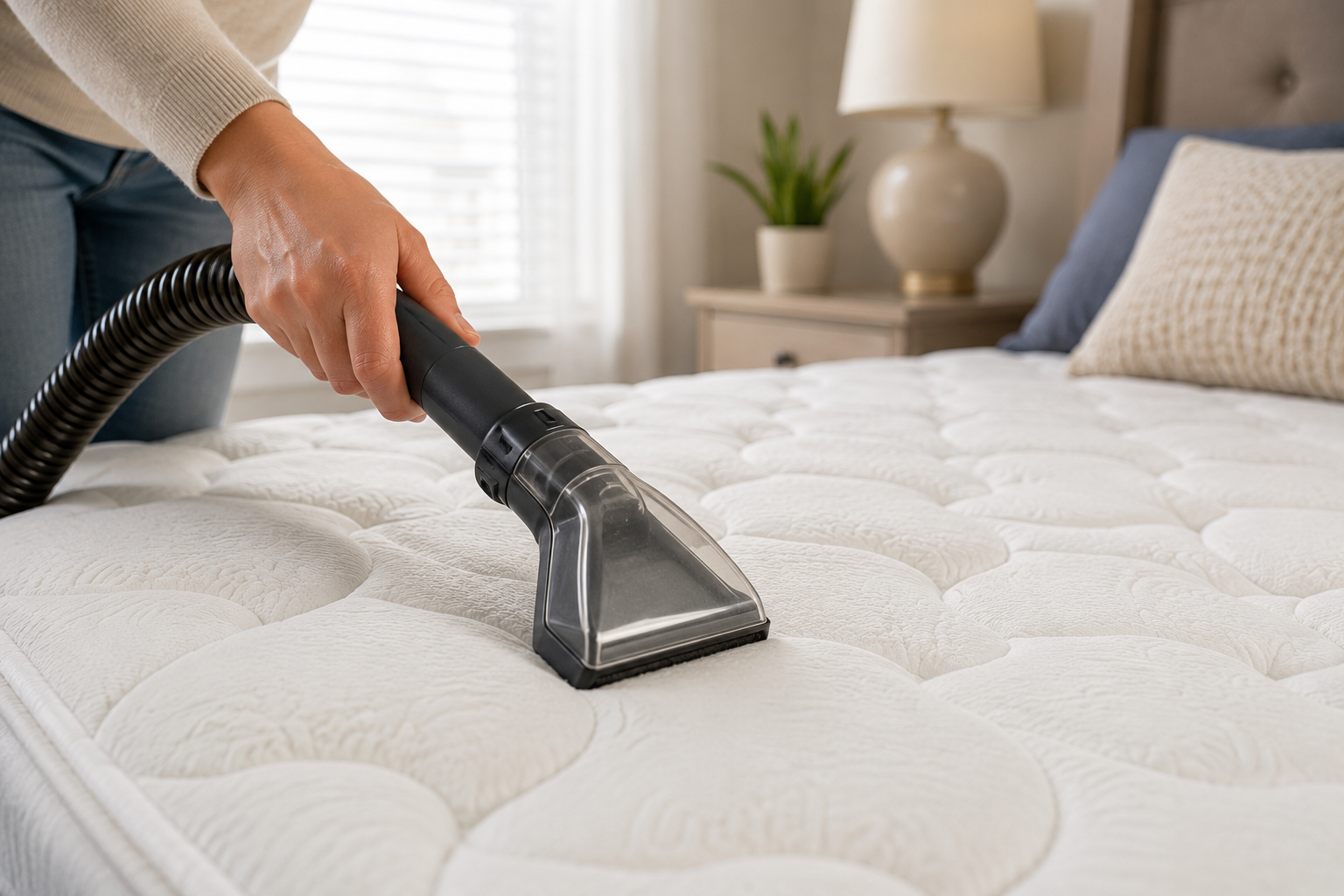
Vacuum mattresses, not just floors
A mattress holds far more dust and dead skin than most people realise. A monthly vacuum with an upholstery attachment makes a real difference, and it's worth doing both sides if your mattress allows for it.
Choose natural fibres where you can
Wool and cotton bedding hold less moisture than synthetic alternatives, which gives dust mites less to work with. This applies to pillows and doonas as well as sheets.
Keep humidity in check
Dust mites struggle in drier air. If condensation is showing up on your windows, that's a sign humidity is high enough to support them too. Our guide to window condensation and mould (publishing soon) covers the same moisture issue from a different angle.
Beyond the Bedroom
Dust mites aren't confined to beds. Carpets, curtains and upholstered furniture all hold onto them too, which is part of why a thorough seasonal clean makes such a noticeable difference to how a home feels, not just how it looks. Lounge rooms with upholstered sofas and rugs are often the second biggest source after bedrooms, simply because they're used daily and rarely get the same attention as bedding.
A Realistic Routine
You don't need to overhaul your entire cleaning routine to get on top of dust mites. A weekly hot wash of bedding, a few minutes of airing each morning and a monthly mattress vacuum covers most of what makes a meaningful difference. The rest, carpets, curtains and upholstery, is where a regular professional clean fills the gap most households don't have time to cover themselves.
A regular clean keeps dust and allergens from building up between washes, especially through the months you're indoors the most. Get a free quote
What to Read Next
FAQs
Can you ever fully get rid of dust mites?
Not completely, they're present in nearly every home. The goal is keeping numbers low enough that they don't cause noticeable allergy symptoms, which regular washing, airing and vacuuming achieves well.
Do air purifiers help with dust mites?
They can help with airborne particles, but dust mites mostly live in fabric and bedding rather than floating in the air, so they're a supplement to good cleaning habits rather than a replacement for them.
Is it worth replacing pillows and doonas regularly?
Pillows are worth replacing every couple of years since they hold onto dust mites and skin cells that washing alone can't fully remove. Doonas last longer if aired and washed regularly.
Are dust mite allergies the same as a dust allergy?
They're related but not identical. Dust mites are one component of household dust, alongside skin cells, fabric fibres and outdoor particles, so someone can react to dust generally without a specific dust mite allergy, or vice versa.