

A Winter Cleaning Checklist for Busy Households
Spring cleaning gets all the attention, but winter is when homes actually need the most help. Windows stay shut, heaters run constantly, and everyone's spending more time indoors. That combination means dust, moisture and germs build up faster than usual, often without anyone noticing until it's a bigger job.
Here's a realistic checklist. Not a weekend-long deep clean, just the areas that matter most through a Melbourne winter, broken into a rhythm you can actually keep up with.
Weekly
Wipe window sills and frames to clear overnight condensation
Run exhaust fans for 15-20 minutes after every shower
Vacuum high-traffic areas where mud and moisture get tracked in
Wash bath mats and hand towels, which hold onto moisture more than people expect
Fortnightly
Wash curtains or at least give them a thorough shake and vacuum
Check under beds and behind wardrobes for musty air pockets
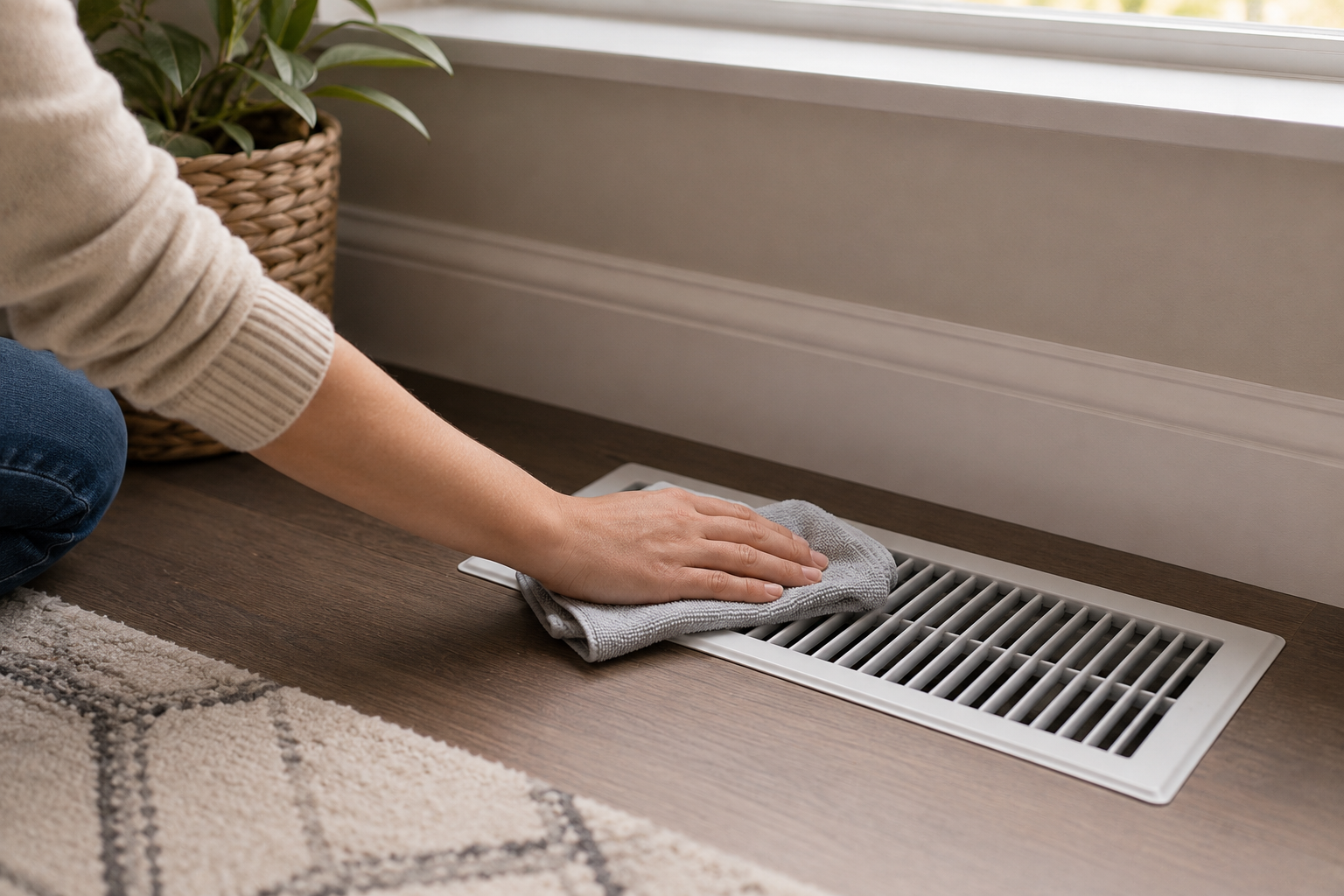
Clean heater vents and filters, which collect dust fast once they're running daily
Wipe down skirting boards, an easy spot to forget that holds a surprising amount of dust
Once a Month
Deep clean the bathroom, including grout lines where mould likes to start
Move furniture away from external walls briefly to air out the space behind it
Wash or air out doonas and pillows
Check window seals and frames for any early signs of mould
Why This Matters More Than You'd Think
It's not about chasing perfection. A closed-up winter home recirculates the same air for months, and that means dust, allergens and moisture have nowhere to go but settle into soft furnishings and corners. We've written before about why dust builds up in bedrooms, and the same pattern shows up across the whole house once the windows stay shut.
A little consistency through winter means you're not facing a huge job when spring rolls around. Households who keep up even just the weekly list tend to find their spring clean is a fraction of the job it would otherwise be, because moisture and dust haven't had months to settle in undisturbed.
How to Make the Checklist Stick
The households that actually keep up with a list like this usually attach each task to something they're already doing, rather than treating it as a separate chore. Wiping sills while the kettle boils, running the exhaust fan timer instead of remembering to switch it off, washing bath mats on the same day as bedsheets. Small adjustments like these are what make the weekly tasks genuinely sustainable rather than another thing competing for attention.
If a task keeps slipping week after week, it's worth asking whether it actually needs to happen weekly, or whether fortnightly is realistic. A checklist that's too ambitious tends to get abandoned entirely, while a slightly looser one that actually gets done is far more useful.
When Life Gets in the Way
Realistically, most households get through the weekly list and maybe half the fortnightly one. That's normal. The monthly tasks are the ones that tend to slip, and they're also the ones that make the biggest difference to how a home feels through the colder months.
If the monthly list never quite happens, that's exactly what a recurring clean takes off your plate. See our cleaning packages
What to Read Next
FAQs
How is a winter cleaning checklist different from spring cleaning?
Spring cleaning is about resetting everything at once. A winter checklist is about staying ahead of moisture and dust while windows are closed, so you're not facing a bigger job later.
What's the most important task on this list?
Running exhaust fans properly after showers. It's the single easiest habit that prevents the moisture build-up behind most winter cleaning problems.
Do I really need to do the monthly tasks?
They make the biggest difference to air quality and prevent small issues like early mould from becoming bigger ones, but they're also the easiest to hand off if your schedule doesn't allow for them.
What if I can only manage one or two things on this list?
Prioritise exhaust fans and window sills. Those two habits address the moisture build-up that drives most other winter cleaning problems, so they give you the most benefit for the least effort.