
How to Clean a Glass Stovetop (Without Scratching It)
A glass stovetop looks great when it's clean and awful when it's not. Grease spatters, burnt-on sauce and those cloudy streaks show up fast on a smooth black surface, and it's easy to make things worse by scrubbing with the wrong thing.
The good news is you don't need anything harsh. A few simple ingredients and the right technique will get it looking new again.
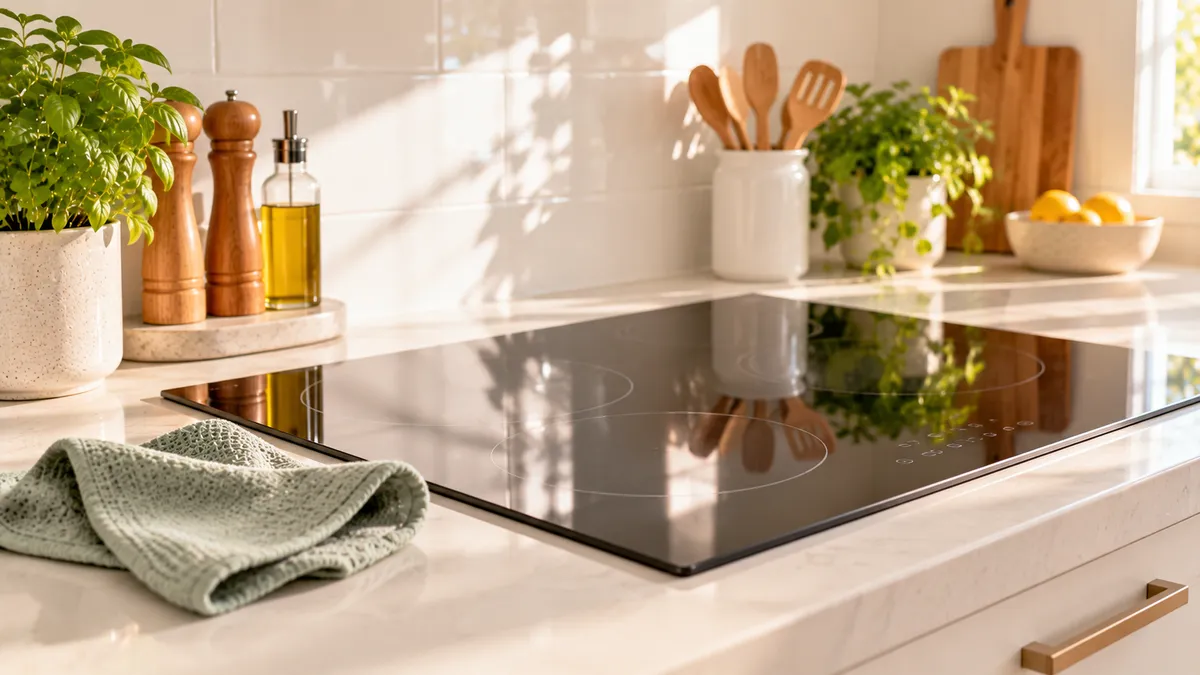
![a clean, glossy glass stovetop with a microfibre cloth beside it]](https://assets.cdn.filesafe.space/WeEwh2bCSr1EDBP50eKk/media/6ad9a63a3699fd27a08bc075.png "a clean, glossy glass stovetop with a microfibre cloth beside it]")
What You'll Need
Bicarb soda
White vinegar in a spray bottle
A few drops of dish soap
Two microfibre cloths, one damp and one dry
A plastic scraper or an old gift card for stubborn spots
Skip steel wool, scourers and anything abrasive. Glass looks tough but it scratches, and those scratches trap more grime every time you cook.
Step by Step
1. Let it cool completely
Never clean a hot glass stovetop. Cleaning products can bake onto the surface, and a damp cloth on hot glass can leave streaks or even cause damage. Wait until it's fully cool to the touch.
2. Clear the loose stuff
Wipe away crumbs and loose debris with a dry cloth first. This stops you dragging grit across the glass in the next steps.
3. Spray with vinegar
Lightly spray the whole surface with white vinegar. It cuts through grease and starts loosening the grime.
4. Sprinkle on bicarb soda
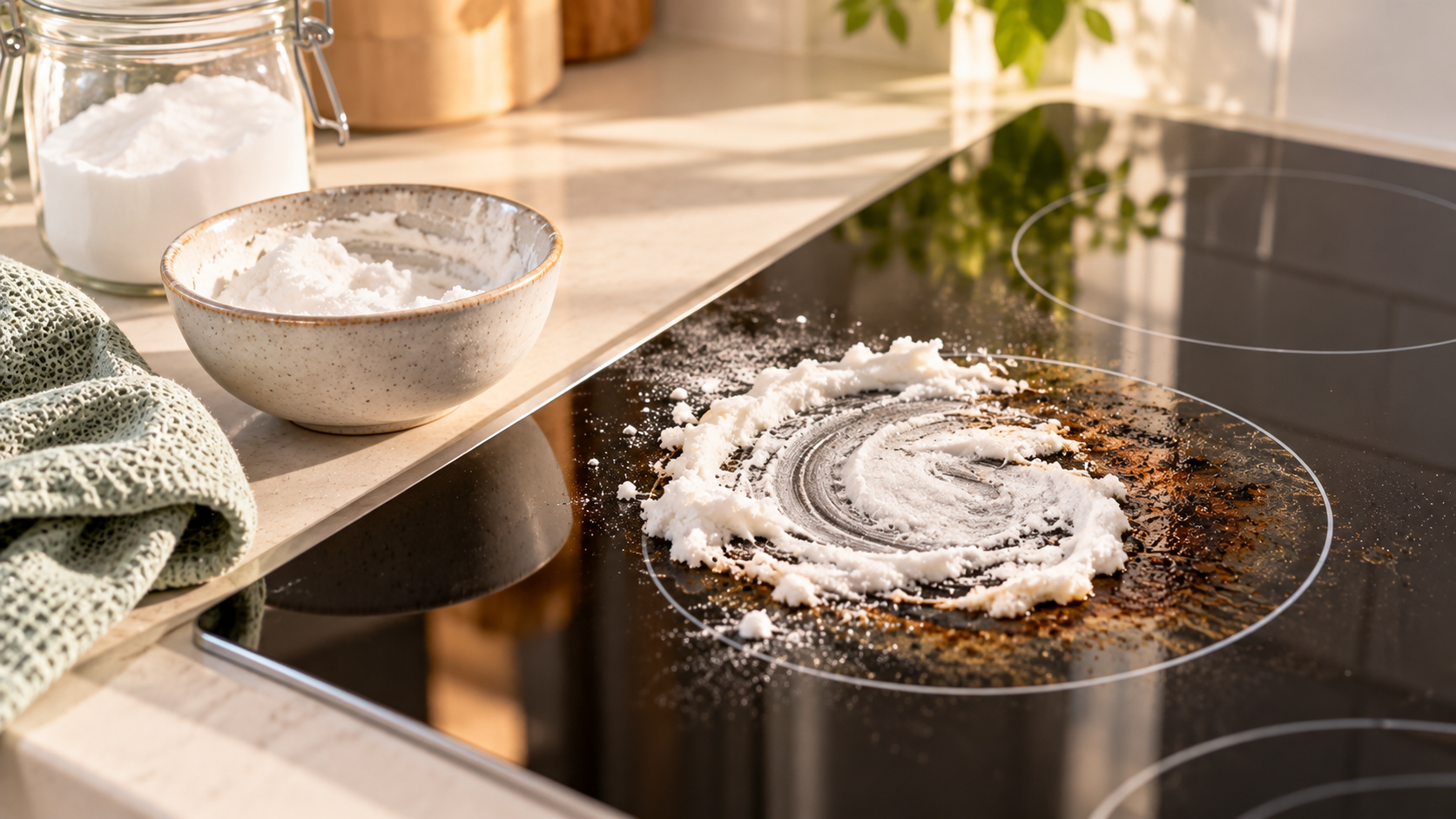
Sprinkle bicarb over the top. It will fizz a little. Cover the area with a damp microfibre cloth and leave it for 10 to 15 minutes so it can soften the cooked-on spots.
5. Wipe in circles
Remove the cloth and wipe the surface in small, gentle circles. The bicarb works as a very mild abrasive that lifts grime without scratching.
6. Deal with burnt-on spots
For stubborn marks, hold a plastic scraper or old gift card at a shallow angle and gently push the burnt bit off. If you're working on a very stubborn spot, leave a bicarb and water paste on it for another 10 minutes first. Never use a metal blade at an angle on glass.
7. Buff dry
Finish with a dry microfibre cloth, buffing in one direction. This is what removes streaks and leaves the glass shiny.
Cleaning Burnt Sugar Properly
Sugar is the one thing that needs special care. If sugar melts onto the stovetop, it can pit the glass once it cools and hardens. If you catch it while the stovetop is still warm (not hot), carefully scrape it off with a plastic scraper, wearing oven mitts. Once it's gone, clean the rest as above.
Keeping It Clean Day to Day
A quick wipe with a damp microfibre cloth after cooking, once the surface has cooled, stops grease building up into the kind of mess that needs a full scrub. Wipe up spills as soon as it's safe to, and avoid dragging heavy pots and pans across the glass.
If your whole kitchen needs the same treatment, our guides to cleaning the oven, microwave and fridge follow the same simple, low-tox approach.
When It's Worth Handing Over
A stovetop is just one spot in a kitchen full of them. If the oven, rangehood and benchtops are all overdue too, a proper kitchen clean is a big job to fit around everything else going on.
If your kitchen's overdue for a proper reset, we're happy to take it off your hands.Get a free quote
What to Read Next
FAQs
Can I use vinegar on a glass stovetop?
Yes, in a light spray it's safe and effective for most glass cooktops. Don't let it pool or sit for long, and wipe it off well. If your manufacturer's guide says otherwise, follow that.
Why does my glass stovetop look cloudy after cleaning?
Usuallyit's leftover residue from cleaning products or hard water. A final wipe with a damp cloth to rinse, then a thorough buff with a dry microfibre cloth, normally fixes it.
Is it okay to use a razor scraper?
Some manufacturers sell their own scraper for this, but a plastic scraper or old gift card is safer for most households, and it's much harder to scratch the glass by accident.
How often should I clean my glass stovetop?
A quick wipe after cooking, and a proper clean once a week if you cook most days.