
Simple daily habits that keep your home feeling clean between professional cleans, without turning maintenance into another chore.
A professional clean gets a home to a genuinely fresh baseline, but what happens in the days and weeks after matters just as much. A handful of small daily habits is the difference between a home that stays feeling reset for weeks, and one that slips back to where it started within days.
None of this is about replicating a full clean yourself. It's about the small, low-effort habits that stretch that fresh feeling out as long as possible.

The Habits That Actually Make a Difference
A two-minute reset before bed
Dishes in the dishwasher, surfaces cleared, cushions straightened. It takes barely any time and means you wake up to a home that still feels clean rather than one that's slowly sliding backwards.
Dealing with mail and mess as it arrives
Clutter builds up gradually, one unopened envelope or dropped bag at a time. A quick habit of dealing with things as they come in, rather than letting them pile up, keeps surfaces clear without ever feeling like a big task.
Wiping as you go in the kitchen
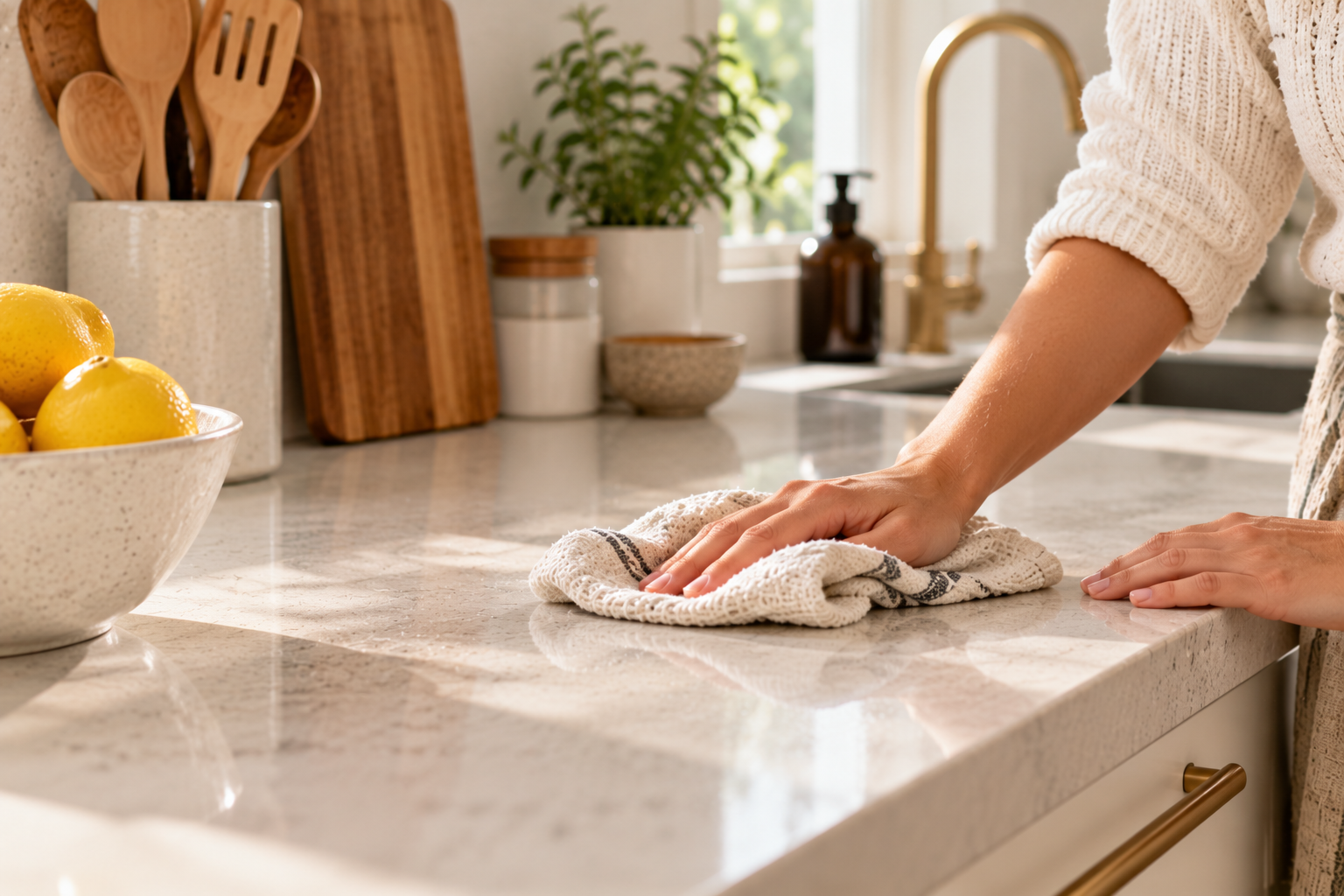
A quick wipe of the benchtop after cooking, rather than leaving it until later, prevents the kind of build-up that turns into a proper scrub later in the week.
A weekly touch-up in high-use rooms
Bathrooms and kitchens show wear faster than anywhere else. A five-minute midweek touch-up in these rooms specifically extends the feeling of a fresh clean much further than skipping straight to the next full clean.
Why Small Habits Beat Big Efforts
This is the same idea behind our guide on how to start a cleaning routine. Small, consistent actions are far easier to sustain than occasional big pushes, and they're what actually keeps a home feeling clean day to day, rather than just on the day the cleaner leaves.
It's worth being realistic here too. Life gets busy, and some weeks these habits will slip. That's fine. The goal isn'tperfection,it's stretching out the feeling of a clean home for as long as reasonably possible between visits.
Getting the Whole Household on Board
These habits work far better when more than one person in the house is doing them. A two-minute reset before bed is easy to skip when it feels like a solo job every night. Splitting it, one person handling the kitchen, another the living areas, means it takes less time for everyone and is far less likely to quietly stop happening after a busy week.
For households with kids old enough to help, even something as simple as putting their own things away each evening takes a genuine chunk of the daily upkeep off your plate.
What a Recurring Clean Takes Off Your Plate
Daily habits handle the surface-level upkeep, but they were never meant to replace a proper clean. Grout, skirting boards, the inside of appliances, all the spots a quick daily habit doesn't reach still need regular, dedicated attention. That's exactly the gap a recurring professional clean fills, so the small habits above are genuinely enough to keep things looking good in between.
A recurring clean handles the deeper work, so your daily habits only need to cover the surface.Get a free quote
What to Read Next
FAQs
How long does the fresh feeling from a professional clean usually last?
It varies by household, but with a few daily habits in place, most people notice their home still feels clean for two to three weeks, longer than without any upkeep at all.
What's the single most effective habit on this list?
The two-minute evening reset. Waking up to cleared surfaces sets the tone for the whole day and prevents small mess from compounding overnight.
Do I need to do all of these habits every day?
Not necessarily. Even picking two or three that fit your routine most naturally makes a noticeable difference compared to doing none at all.
What if these habits still aren't enough to keep the house feeling clean?
That's usually a sign the gap between professional cleans is longer than your household's pace of daily life can comfortably cover. Moving to a more frequent recurring service, weekly instead of fortnightly, for example, is often the simpler fix rather than adding more daily habits on top.