How to Clean Your Kitchen Without Harsh Chemicals
The kitchen is where harsh chemicals make the least sense of anywhere in the house. It's the one room where surfaces come into direct contact with the food you eat, so what's left behind after cleaning actually matters in a very practical way, not just a general wellbeing sense.
The good news is natural ingredients handle kitchen grime just as effectively as commercial sprays, in most cases with things already sitting in your pantry.
What You Actually Need
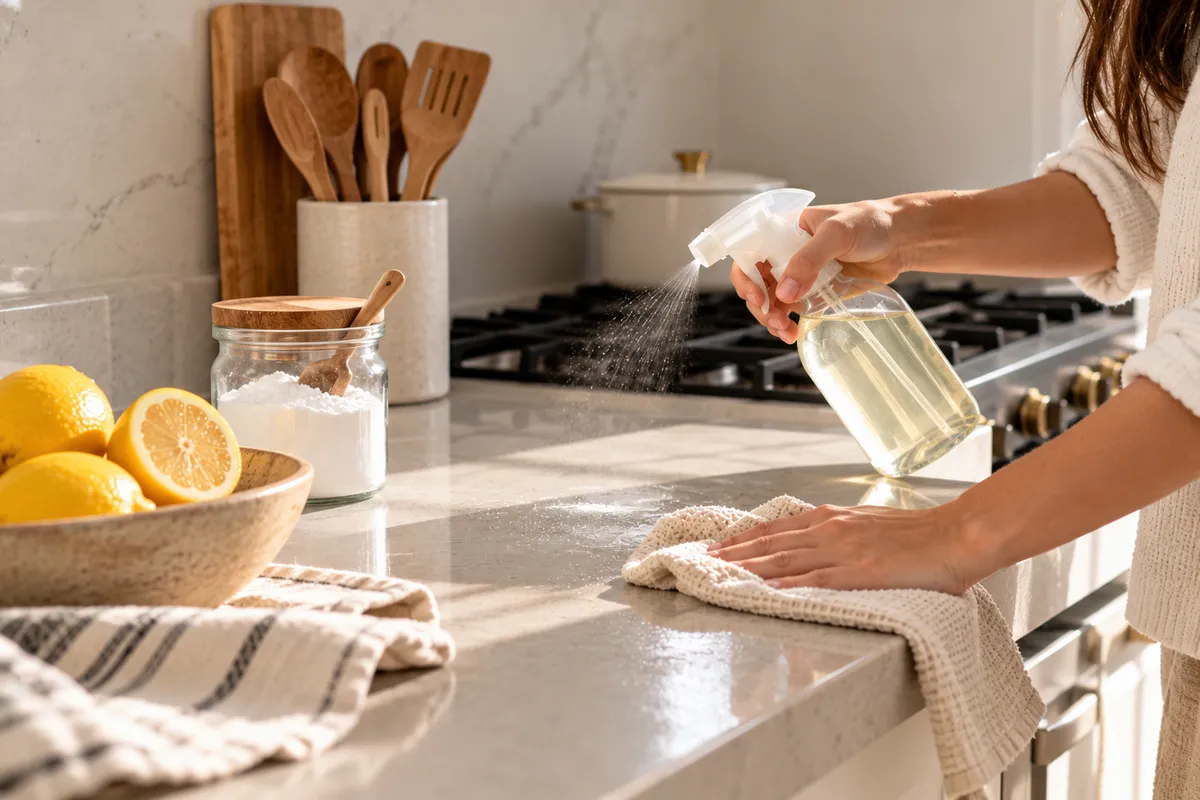
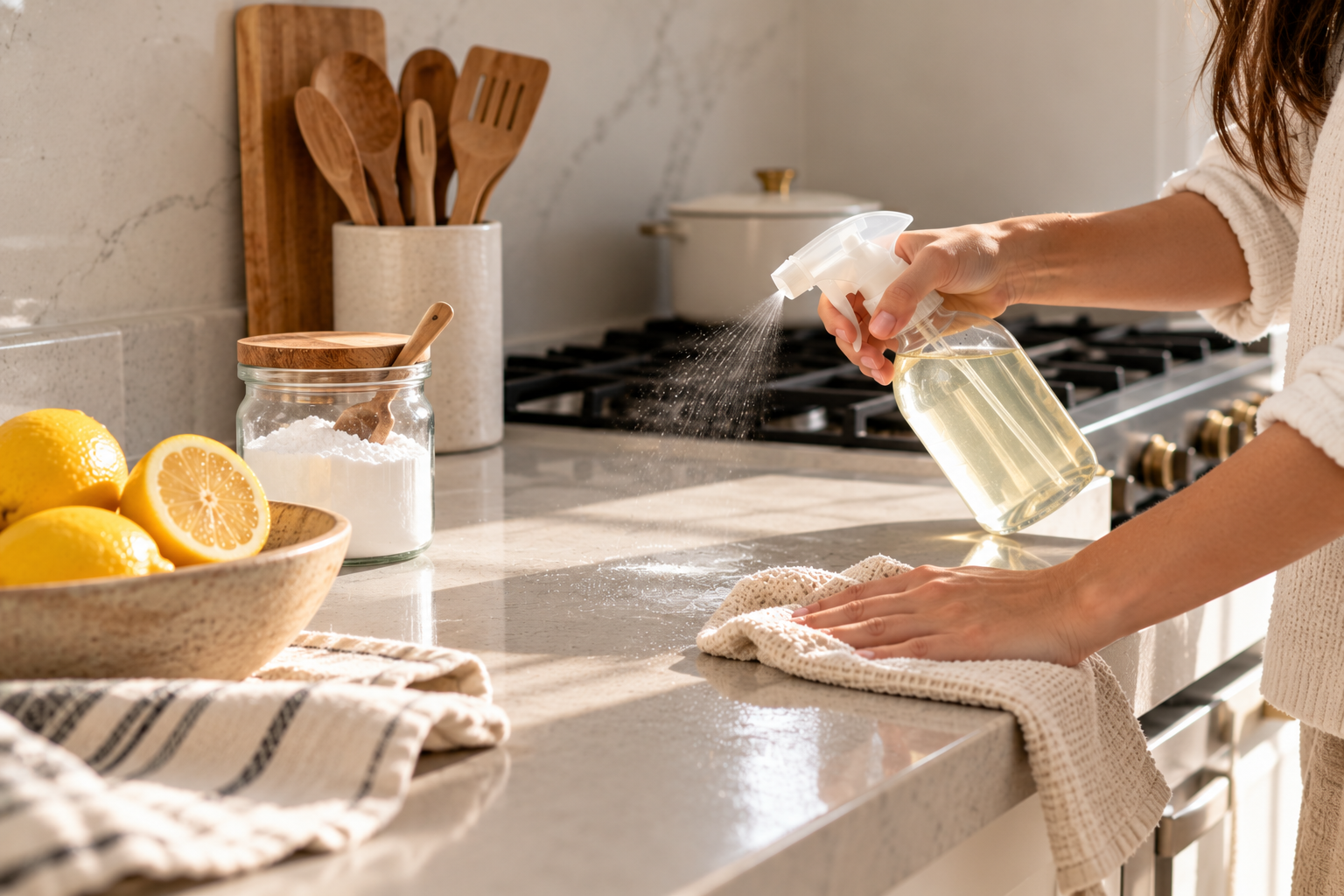
White vinegar, for cutting grease and disinfecting benchtops
Bicarb soda, for scrubbing and absorbing odours
Lemon, for cutting through grease and freshening as you go
Microfibre cloths, for benchtops and appliances
A soft-bristled brush, for stovetops and oven racks
Room by Room
Benchtops
A vinegar and water spray, wiped down after each use, handles everyday grease and crumbs. For stone benchtops, check the manufacturer's care guidance first, as vinegar's acidity isn't suitable for all natural stone finishes.
Stovetop
Bicarb soda paste, left to sit on grease for a few minutes before wiping, lifts cooked-on residue without scratching. Lemon halves work well on stainless steel stovetops for a final polish.
Inside the oven
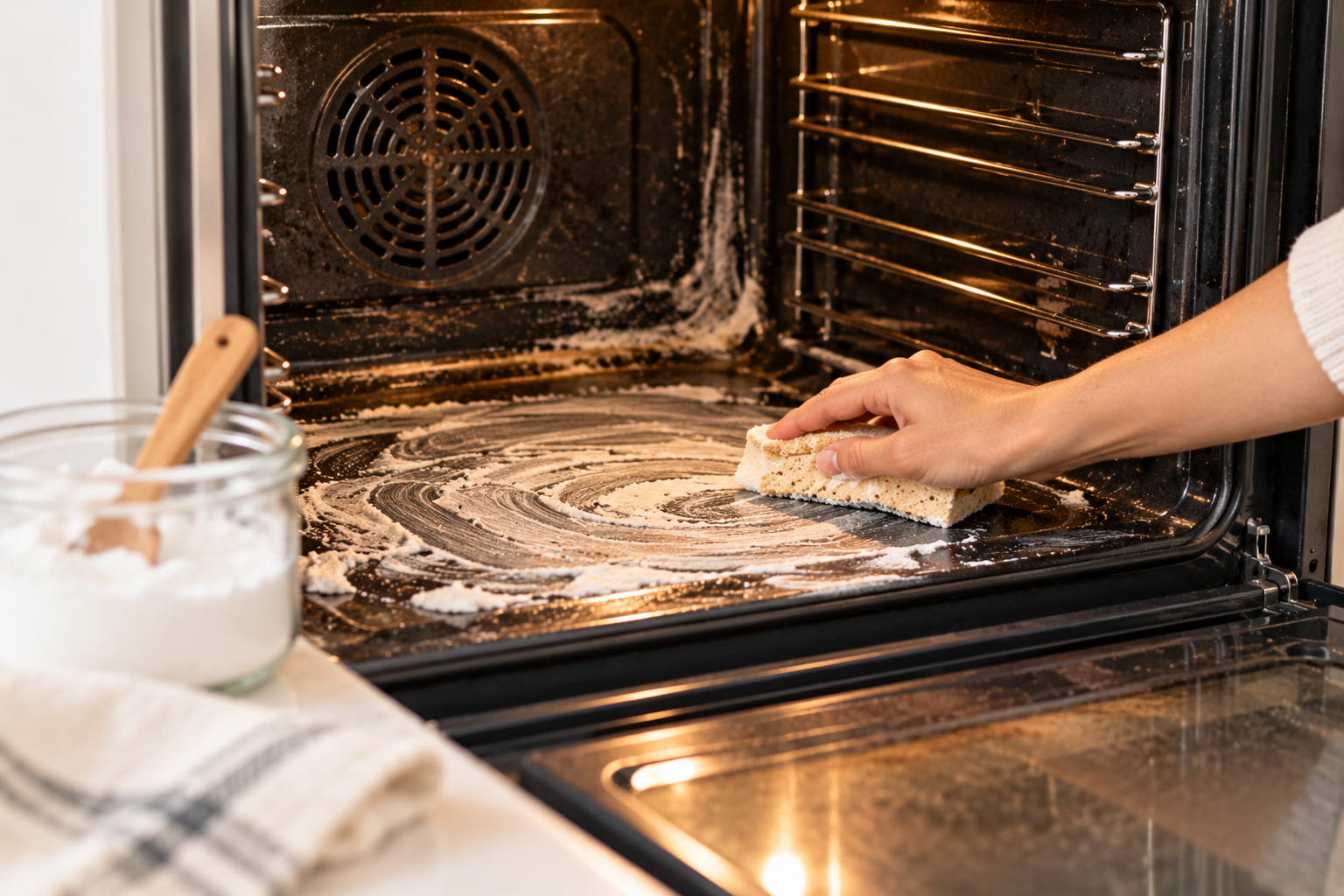
A bicarb soda and water paste spread across the oven interior, left overnight, then wiped clean the next day, handles most baked-on grime. Follow with a vinegar spray to lift any remaining residue.
Fridge
Bicarb soda dissolved in warm water cleans shelves and drawers without leaving a scent that transfers to food. An open box of bicarb soda left inside also helps absorb odours between deeper cleans.
Sink and drains
Bicarb soda followed by a vinegar pour creates a natural fizzing reaction that helps clear minor build-up in drains, similar to the toilet method. For the sink basin, bicarb soda on a damp cloth handles everyday grime and water spots.
Cutting Boards and Food Prep Surfaces
These deserve particular attention given direct food contact. A mix of vinegar and water, sprayed and left for a couple of minutes before rinsing, disinfects effectively without leaving any residue that could transfer to food. For wooden boards specifically, avoid soaking, a quick spray and wipe is enough.
Small Appliances and Everyday Spots
The kettle, toaster and microwave all get touched daily but rarely get proper attention. A vinegar and water solution run through the kettle every few weeks clears mineral scale without leaving a taste behind. For the microwave, a bowl of water with a splash of lemon juice, heated for a couple of minutes, loosens splatters enough to wipe the interior clean with barely any scrubbing.
Bin areas and the space underneath the sink are easy to overlook entirely. A quick wipe with the same vinegar solution used elsewhere keeps these spots from becoming the source of lingering kitchen odours.
Why This Matters More in the Kitchen Than Anywhere Else
Harsh chemical residue on a benchtop or cutting board can transfer directly to food, in a way it simply doesn't in a bathroom or living room. That's part of why our whole approach centres on products that are genuinely safe around the surfaces people cook and eat on, not just marketed as such. Our piece on non-toxic cleaning for families goes into more detail on why that distinction matters.
Keeping On Top of It Between Deep Cleans
A quick wipe-down after cooking each day prevents most of the build-up that turns into a bigger job later. The oven and fridge deep cleans above are worth doing every month or two rather than weekly,they're not part of the daily routine, just a periodic reset.
If the kitchen's overdue for a proper reset, we can take care of the deep clean so you can keep it going with the everyday natural approach.Get a free quote
What to Read Next
FAQs
Is vinegar safe on all kitchen surfaces?
It's safe on most benchtops and appliances, but avoid it on natural stone like marble, where the acidity can dull or etch the surface, and on cast iron cookware, where it can affect seasoning.
Does bicarb soda actually disinfect?
Bicarb soda is mildly abrasive and helps lift grime mechanically, but it's not a strong disinfectant on its own. Pairing it with vinegar's mild antibacterial properties covers most everyday kitchen hygiene needs.
How often should the oven get a proper clean?
Every four to six weeks for a household that cooks regularly is a reasonable rhythm. More frequent use means more frequent build-up, so adjust based on how often the oven's actually in use.
Will natural cleaning leave any smell behind?
Vinegar's smell fades within a few minutes of drying and doesn't linger the way some chemical sprays do. Adding a few drops of lemon juice to your spray bottle helps mask it in the meantime if you'd rather not smell it at all.
Can I use these methods on stainless steel appliances?
Yes, and lemon in particular works well here. Rubbed along the grain of the steel with a soft cloth, it cuts through fingerprints and light grease while leaving a natural shine, without the streaking some commercial stainless steel sprays can leave.