
How to Clean a Rangehood and Its Filter
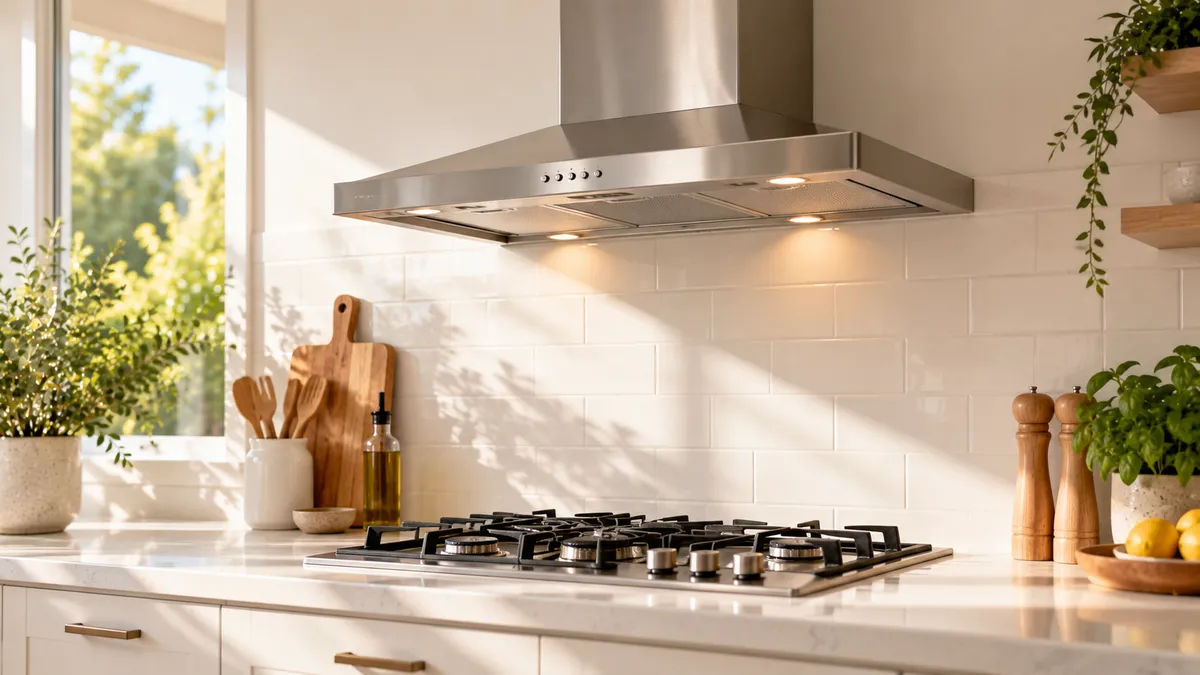
The rangehood is one of the dirtiest things in a kitchen, and one of the most ignored. Every time you cook, it pulls grease and steam up into the filter and the hood, and over time that builds into a sticky, yellow film.
A clogged filter doesn't just look gross. It makes the rangehood less effective at clearing smoke and smells, and built-up grease can be a fire risk. Cleaning it every month or two takes about half an hour.
What You'll Need
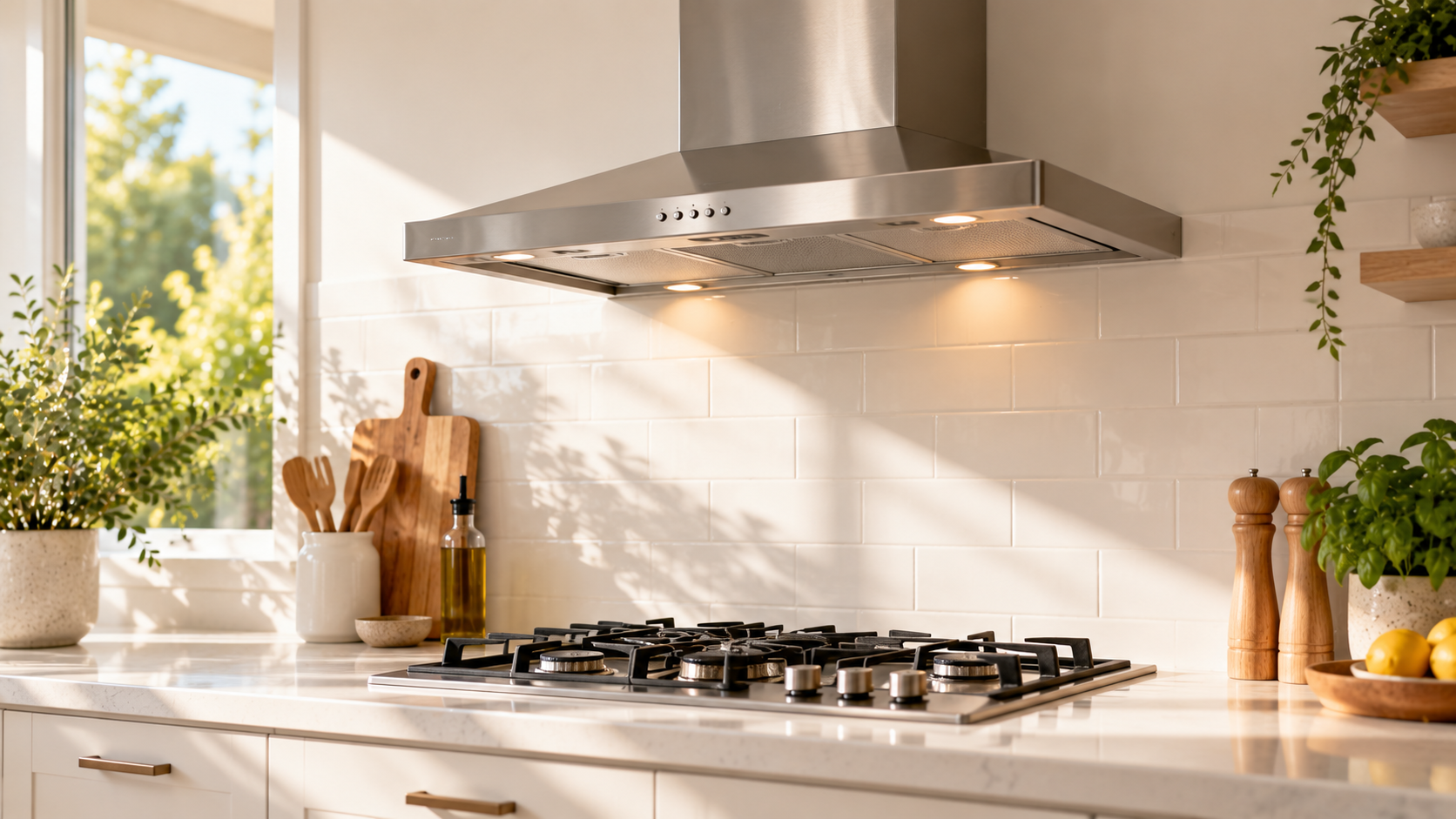
Hot water and dish soap
Bicarb soda
White vinegar in a spray bottle
A large sink or basin
A soft brush or old toothbrush
Microfibre cloths
Cleaning the Filter
1. Turn it off and remove the filter
Switch the rangehood off at the wall, then take the filter out. Most slide or clip out easily, check your manual if you're not sure.
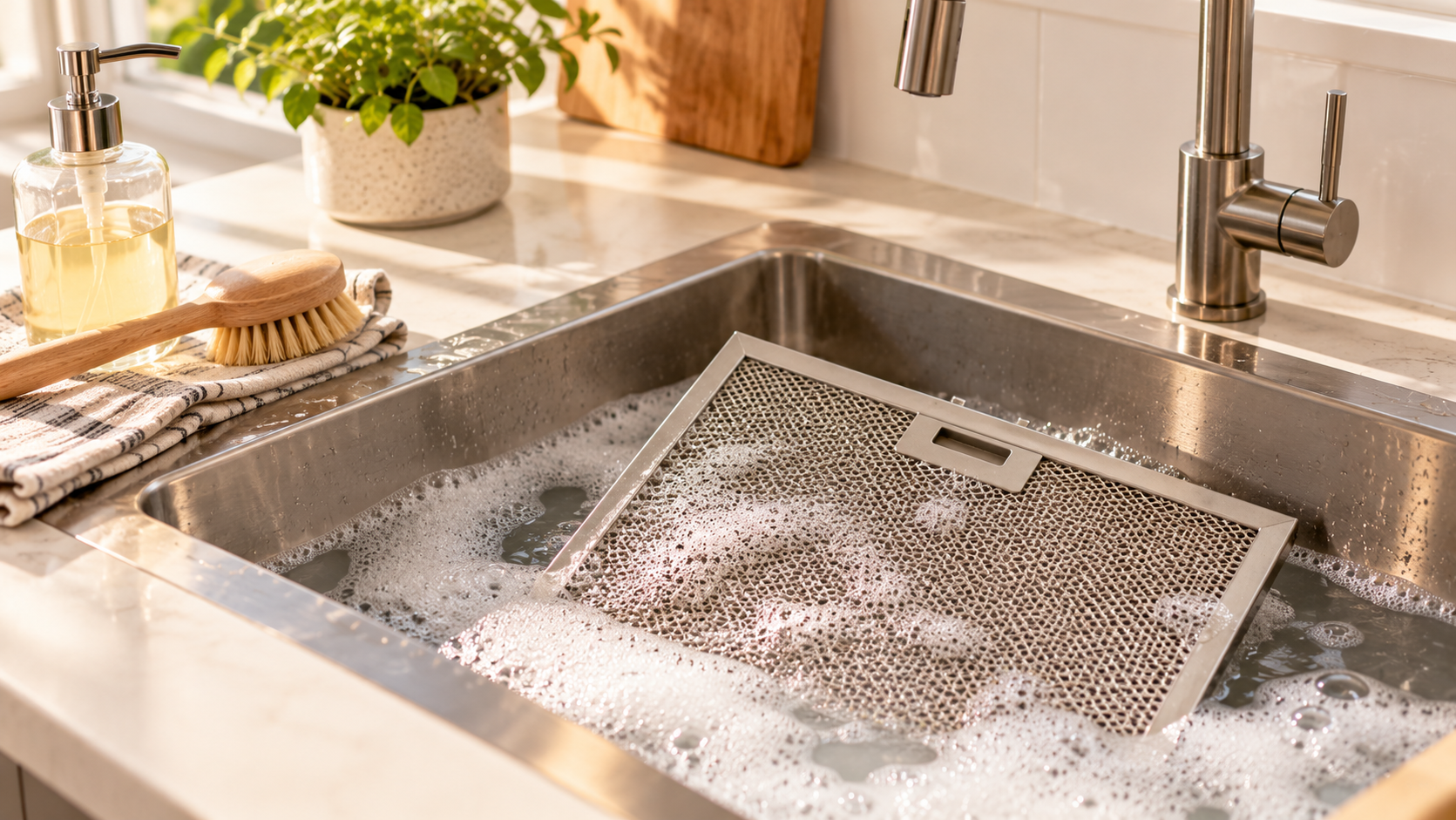
2. Soak in hot, soapy water
Fill a sink with very hot water, a good squirt of dish soap and a few tablespoons of bicarb soda. Submerge the filter and leave it for 10 to 15 minutes. It may fizz and the water will turn grey as the grease lifts.
3. Scrub gently
Use a soft brush to scrub along the mesh, getting into the corners. For very greasy filters, leave it to soak a bit longer or repeat with fresh water.
4. Rinse and dry thoroughly
Rinse well with hot water and let it dry completely before putting it back. A damp filter can cause problems with the motor and encourage odours.
Cleaning the Hood Itself
While the filter dries, spray the inside and outside of the hood with white vinegar, and wipe with a damp microfibre cloth. For stubborn grease, make a paste with bicarb soda and a little water, leave it for a few minutes and wipe clean.
Stainless steel hoods should be wiped in the direction of the grain, then buffed dry with a clean cloth to avoid streaks.
How Often to Clean It
If you cook most days, clean the filter every month. For lighter use, every two to three months is fine. If you do a lot of frying or cook with strong smells, lean towards the shorter end.
Signs It's Overdue
Grease dripping or sticky to the touch on the underside of the hood
Cooking smells lingering well after the meal
A noisy fan or weaker suction than it used to have
A yellow or brown film on the cabinets above and beside the hood
If you're nodding along to two or more of these, it's time. The good news is a neglected filter usually comes back to life with a proper soak.
Why It Matters
A clean rangehood pulls steam, smoke and smells out of the kitchen properly, rather than letting them settle on your cabinets and benchtops. It's one of those jobs that makes the rest of the kitchen easier to keep clean too.
It's a natural next step after the oven and microwave in a full kitchen reset.
When It's Worth Handing Over
Rangehoods are awkward, greasy and easy to put off. If the filter's been neglected for a year or more, it's a job where a bit of help makes a big difference.
If your kitchen's overdue for a proper reset, we're happy to take care of it. Get a free quote
What to Read Next
FAQs
Can I put my rangehood filter in the dishwasher?
Some metal mesh filters are dishwasher safe, but check your manual first. Soaking by hand is safer and usually just as effective.
What if my filter is charcoal?
Charcoal filters can't be washed and need replacing every three to six months, depending on how often you cook. Check your manual for the right type.
Is a greasy rangehood really a fire risk?
Heavy grease build-up is flammable, which is one more reason to keep the filter clean, particularly if you cook with a lot of oil or on high heat.
Why does my kitchen still smell after cooking?
A clogged filter is a common cause. Cleaning it, and using the rangehood on a higher setting while you cook, usually helps.